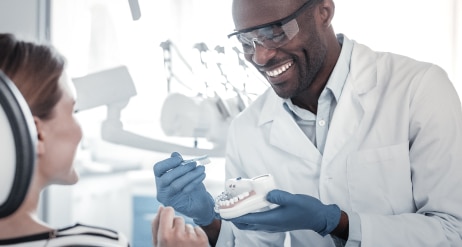
• A professional cleaning to remove external staining caused by food and tobacco
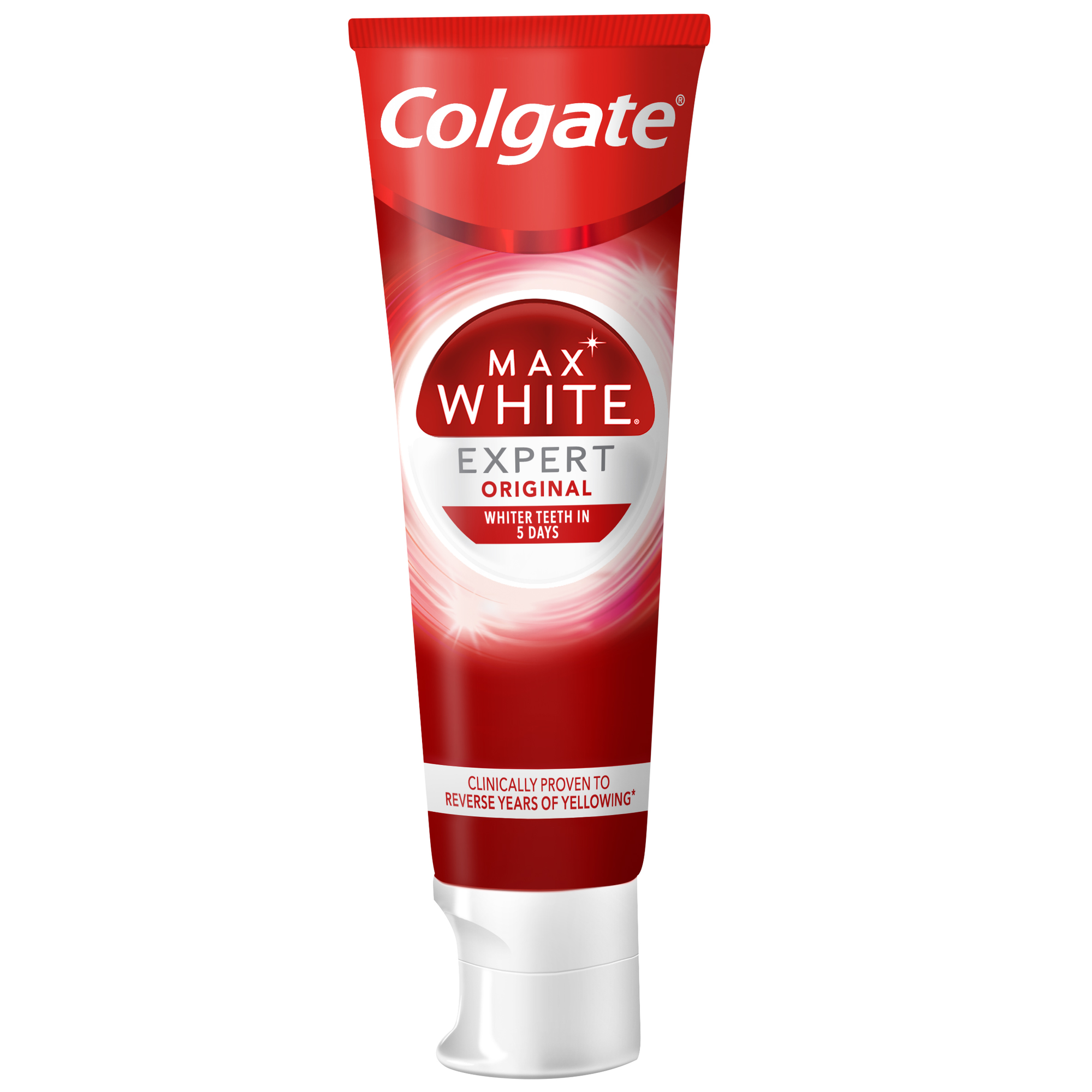
  • Use of a whitening toothpaste to help remove surface stains between dental visits
  • Bleaching (in-office or at-home) for more stubborn discoloration
  • Porcelain Veneers or tooth-coloured restorations to fix irregular or damaged teeth or to achieve specific results


Ask your dentist which method will achieve the best results for you.

  • Teeth that are yellow respond best to bleaching. Brown or gray teeth, or teeth striped or mottled from tetracycline or too much fluoride, may not whiten evenly when bleached.
  • People with periodontal disease or particularly sensitive teeth may want to avoid chemical whitening techniques that can irritate tender gums.
  • Bleaching works on natural teeth and is not recommended if you have tooth-coloured fillings, crowns, caps or bonding in your front teeth.
  • In some cases if appropriate, a crown or cap may result in a whiter and more appealing smile.

Copyright © 2002, 2003 Colgate-Palmolive Company. All rights reserved.

This article is intended to promote understanding of and knowledge about general oral health topics. It is not intended to be a substitute for professional advice, diagnosis or treatment. Always seek the advice of your dentist or other qualified healthcare provider with any questions you may have regarding a medical condition or treatment.